
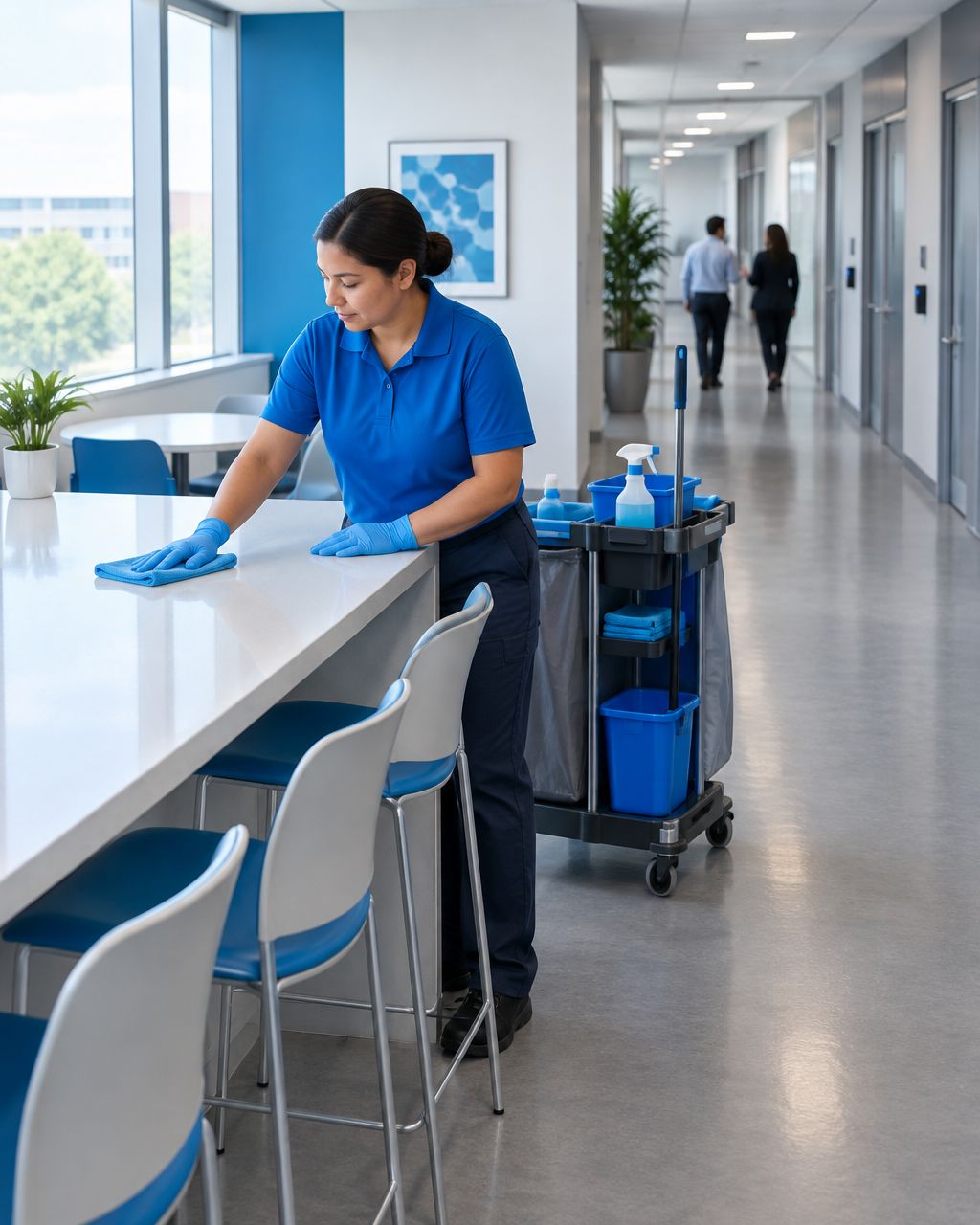
Yes—life sciences facilities can schedule approved commercial cleaning during business hours when the facility authorizes the tasks, areas and working conditions. For a Greater Philadelphia site in 2026, separate ordinary office and common-area work from research procedures; daytime or after-hours timing alone does not authorize controlled-environment work.
Key takeaways
- Life sciences facility cleaning can run during business hours for approved tasks and available areas.
- The facility authorizes rooms, surfaces, access windows and movement routes before work starts.
- After-hours timing does not authorize cleanroom work, research procedures or restricted waste handling.
- Give workers stop-work instructions, a reachable facility contact and a blocked-task process.
- Hi Shine provides dedicated commercial cleaning teams; confirm your Greater Philadelphia site's daytime scope.
Can life sciences facilities schedule cleaning during business hours?
Yes, when the approved assignment fits the facility's occupied operations. A lobby, restroom or administrative room can be available for a defined task without every adjacent space being available too. Room permissions, products, movement and research boundaries remain specific to the facility.
Hi Shine's biotech and life sciences commercial cleaning scope covers office, administrative and common-area spaces surrounding research environments. Its published service includes scheduling around lab hours and shift changes. Confirm the actual daytime tasks and windows during the facility assessment.
| Area or condition | What must be decided before daytime work |
|---|---|
| Reception and common areas | Available work window, occupied movement and approved surfaces |
| Restrooms and locker rooms | Occupancy, privacy, access and service instructions |
| Breakrooms | Available period, included tasks and supply arrangements |
| Administrative offices | Permission, occupancy and document boundaries |
| Support corridors | Movement route, approved surfaces and restrictions |
| Research or controlled spaces | Separate procedures, qualifications and explicit facility authorization |
| Unknown spills or containers | Stop-work instruction and responsible facility contact |
The table describes permissions to resolve, not blanket approval for a type of room. For the 2026 agreement, keep the authorized tasks and conditions alongside the service window so workers can follow the decision on site.
Why timing and authorization are different decisions
A task can be ordinary commercial cleaning but unavailable during a particular window. Another task can remain outside scope even when the room is empty. Both situations need a clear instruction rather than a general promise of flexible scheduling.
The facility owns research boundaries, safety conditions and access decisions. The commercial service assignment defines the approved work and its execution. A service supervisor cannot authorize research work on the facility's behalf.
An empty room is not an authorization. A worker should not enter or touch equipment because the activity appears to have stopped. Keep controlled spaces and unresolved tasks excluded unless the responsible personnel have approved a separate assignment.
Build the 2026 daytime plan
Map the areas and surfaces first
Use a current room list and floor plan. Identify included ordinary areas, conditional areas and exclusions. Within each included room, identify the surfaces the crew can clean and those that remain untouched.
Record:
- Room or zone name.
- Included task and accessible surface.
- Research equipment and materials excluded from work.
- Person who authorizes entry and changes.
- Approved window and movement route.
Keep conditional work clearly labeled. An escort requirement, release condition or additional instruction needs an owner. Do not treat an unresolved condition as a suggestion workers can interpret themselves.
Set windows around actual operations
Review occupied periods, shift changes, meetings and common-area use with the facility contact. Choose service windows that preserve the approved movement and safety conditions. Do not assume a room shown empty during a tour will be available at the same time every visit.
Write the planned arrival, task window and departure instructions. Identify how workers report a blocked window and who approves an alternative. A task due today is not permission to interrupt active work.
For your 2026 schedule, separate routine and periodic assignments. Noise, wet surfaces or equipment can require a different available area. Give those tasks their own approval and schedule rather than squeezing them into the daytime route without review.
Walk the complete route
Start where workers arrive. Follow the path to supplies, included rooms, ordinary waste handoff, storage and the exit. A room-level scope can still fail if the route crosses restricted areas or conflicts with occupied movement.
Confirm:
- Approved check-in and credential process.
- Entry doors and allowed corridors.
- Escort or room-release requirements.
- Tool and supply staging locations.
- Ordinary waste collection points and handoffs.
If a route is blocked, workers need an approved alternative or a stop-and-notify instruction. Do not let route convenience override the access boundary. Keep required exits and movement clear under the facility's procedures.
Define occupied-area precautions
Review noise, odor, product use, privacy and wet surfaces with the responsible facility personnel. Specify when a task requires the area to be unavailable to occupants and how that condition is established. Workers should not create their own occupancy rules.
Use approved products and applicable manufacturer instructions. Surface compatibility and safe-use requirements remain part of the task even in ordinary common areas. A product permitted after hours is not automatically approved for every occupied setting or surface.
State how photography, device use and confidential visibility are handled. Proof of task completion should not expose research information. Agree on a documentation format that respects the same boundaries as the work.
Give stop-work conditions a named contact
Write the conditions that stop a task: missing authorization, active work, an unsafe route, an unknown spill or an unfamiliar container. Identify the facility contact authorized to decide what happens next.
The instruction should explain:
- What work stops and what remains untouched.
- Who receives the notification.
- How the event is recorded.
- Who can authorize a new instruction.
- How the blocked task is resolved or rescheduled.
A worker following a stop-work boundary has not silently skipped the task. Record the reason so the facility can distinguish correct restraint from missed execution. Do not mark the task complete merely because the visit occurred.
Document staffing and backup readiness
Identify assigned personnel, supervision and the approved absence process. Backups need the facility's required authorization and current route instructions. Stable staffing supports familiarity but does not mean access or training remains permanent.
Hi Shine provides dedicated commercial cleaning teams for biotech facilities. Confirm the roster, notice of changes and approval process for the actual daytime assignment. A service description should not substitute for the facility's personnel requirements.
Communicate revised procedures to regular and backup workers. If a corridor, room or window changes, update the written instruction. Knowing yesterday's route is not enough to establish permission today.
Confirm commercial task completion
Hi Shine's HI-Q™ Quality System configures tasks to facility specifications, guides each visit and requires team-lead confirmation. Unfinished work is flagged for follow-up. It supports commercial janitorial accountability, not validation of research procedures.
Agree on the information the facility receives. An internal checklist does not automatically establish a customer dashboard, photographs, room signatures or a regulated record. Confirm the available format and any required reporting fields for the assignment.
At the 2026 service review, separate completed, missed, blocked and excluded tasks. Use the recorded reason to locate the next decision. A repeated blocked window needs access or scheduling review; an accessible task repeatedly missed needs an execution correction.
Preserve research, equipment and waste boundaries
Daytime janitorial work does not extend into experiments, cleanroom processes or equipment procedures because the commercial team is already present. Any separate work requires the applicable procedures, qualifications and explicit authorization. After-hours timing does not remove those requirements either.
Identify ordinary trash and approved coordination separately from restricted waste handling. Workers should not infer a container's contents or ownership from its location. An unknown container needs the facility's defined notification process.
Keep no-touch instructions attached to the room task. Moving a cart, instrument, cable or research material can be outside the assignment even if it would make cleaning easier. Record blocked work rather than rearranging the facility without permission.
Plan exceptions and handoffs
Name the commercial service contact for incomplete work and the facility contact for access, safety and research questions. Each has a different decision role. Workers need both contacts rather than a general assurance that someone is available.
Hi Shine provides 24/7 owner access for service issues. Agree separately on response expectations and correction procedures. Direct access to the service owner does not authorize a research task or replace the facility's approval process.
For unresolved work, record the affected task, reason, person notified and next responsible owner. If an alternative window is approved, communicate it to the assigned team and anyone controlling access. A message is useful only if it reaches the people who need to act.
Test the daytime assignment under normal conditions
Hi Shine offers a 90-day risk-free trial. Confirm written terms and the included daytime scope before starting. Verify relevant insurance documentation; Hi Shine identifies $5MM coverage, which should be checked against the facility's requirements without treating it as technical qualification.
Evaluate:
- Approved personnel and current access.
- Work within authorized rooms and windows.
- Respect for equipment and information boundaries.
- Accurate notification of blocked work.
- Completion confirmation and verified corrections.
- Periodic or conditional tasks not tested during the trial.
Use representative occupied periods where the facility permits them. A trial conducted only when the building is empty does not test the daytime constraints. Keep the criteria focused on the actual assignment, not a claim that all research risk has been eliminated.
Related daytime scheduling questions
Can office-area work occur while people are present?
Yes, when the facility authorizes the task and occupied conditions. Define movement, privacy, noise and product restrictions before scheduling the work.
Does after-hours cleaning make controlled work ordinary janitorial work?
- Controlled-area procedures and qualifications remain separate regardless of the time of day. A service window is not a change in scope authorization.
What happens if a planned room becomes unavailable?
Record the blocked task, follow the facility's notification procedure and seek an approved alternative. Workers can continue only other work already within their authorized assignment.
Common daytime planning gaps
Setting the hours before deciding the zones
Define tasks and permissions first. A staffed window without an approved assignment cannot establish what workers may do.
Letting familiarity replace current instructions
Assigned workers still need revised access and route information. Include backups in every relevant change.
Hiding blocked work in a completed checklist
Separate task outcomes. The facility needs to see the unresolved decision before it can make the schedule workable.
FAQ
Can life sciences facilities schedule cleaning during business hours?
Yes, for approved commercial tasks when the facility authorizes the areas, windows and occupied conditions. Research and controlled work remain separately defined and authorized.
Which areas can be considered for daytime service?
Discuss offices, lobbies, restrooms, breakrooms and approved common areas with the facility contact. Room type alone does not establish permission, method or availability.
Can controlled areas be cleaned after hours without separate approval?
No. After-hours timing does not replace the facility's procedures, qualifications or authorization for controlled work.
What should the route instructions include?
Include check-in, credentials, allowed corridors, included rooms, supply access, ordinary waste handoffs and stop-work conditions. Define the contact for blocked routes.
How should backups be prepared?
Backups need the facility's required approval and current instructions before entry. Define notice, orientation and credential responsibilities in the staffing plan.
What happens after an unknown spill or container is found?
Follow the facility's stop-work and notification procedure. Ordinary daytime janitorial scope does not establish hazardous-material or restricted-waste response authorization.
How should the daytime trial be evaluated?
Check authorized access, task completion, boundary adherence, exceptions and verified corrections under representative occupied conditions. Confirm trial terms and list any work not tested.
One last thing
Ask who can release a blocked task. If nobody has been named, the crew cannot turn a missed window into authorized work. Request a free facility assessment with the room list, operating windows and unresolved access decisions ready.