
Lab Cleaning Vendor Site Walkthrough: 2026 Guide
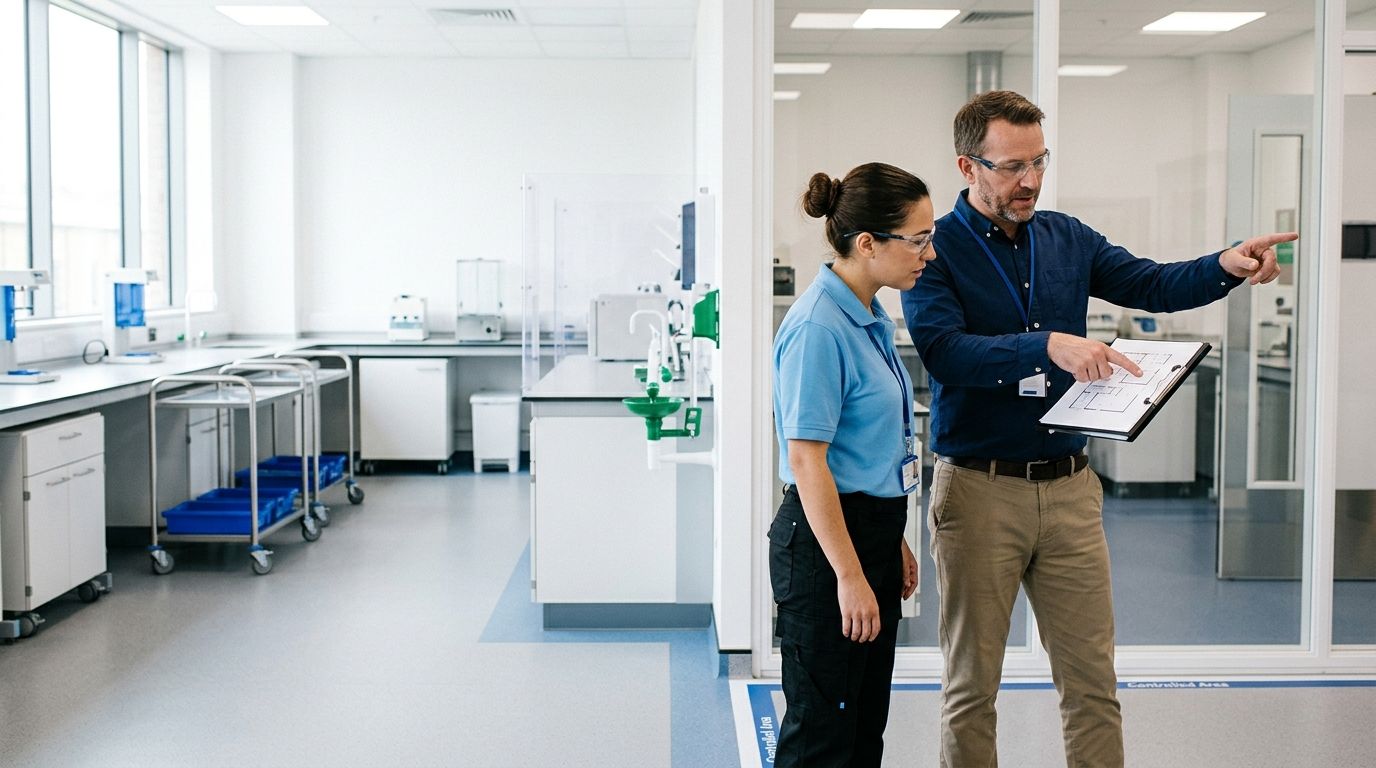
Prepare a lab for a cleaning vendor walkthrough by mapping zones, active operations, equipment boundaries, approved tasks, access, waste handoffs, products, records, and stop-work conditions before the vendor arrives. A 2026 walkthrough should produce a quoteable scope and exclusion list, not a vague promise to clean the facility.
Hi Shine's biotech and life-sciences facility page explains the commercial environments the team is built to assess.
- A lab cleaning vendor site walkthrough in 2026 should start with a current room list and operating constraints.
- Mark ordinary, controlled, restricted, and excluded zones on the floor plan.
- Assign equipment, waste, spills, and clinical or process tasks to named owners.
- Walk the actual entry, work, waste, and exit routes.
- End with open questions, exclusions, and the documents needed for a comparable proposal.
Why this matters
Labs are easy to misquote. Two rooms with the same area can require different access, materials, schedules, and documentation. A vendor may see open floor space while the facility sees a calibrated instrument boundary, controlled workflow, or room that cannot be entered during active operations.
The facility owns those distinctions. Preparing them before the 2026 walkthrough reduces assumptions and helps every bidder price the same work.
Preparation also protects the people leading the tour. Instead of answering technical questions from memory, they can route each open item to the person who owns safety, quality, security, waste, or laboratory operations. The proposal then reflects approved facts rather than hallway estimates.
How to prepare a lab for a cleaning vendor site walkthrough
Build a walkthrough packet before the visit. It does not need to be polished, but it must be current enough to show the work accurately.
Include these documents
- Building and floor plan
- Room list with names and numbers
- Operating hours by zone
- Restricted-area map
- Existing cleaning scope, if one exists
- Current issue or complaint patterns
- Product and material restrictions
- Access, gowning, and escort rules
- Waste streams and handoff points
- Emergency and stop-work contacts
- Desired proposal format
Remove protected, confidential, proprietary, or process-sensitive information that the vendor does not need. Share only what is necessary to scope the work.
Classify every zone for the 2026 walkthrough
Use a simple pre-walk label so the vendor knows what kind of discussion belongs in each area.
| Zone type | Walkthrough purpose |
|---|---|
| Ordinary commercial | Confirm routine rooms, tasks, floors, waste, and access |
| Laboratory support | Confirm boundaries, approved surfaces, schedules, and materials |
| Controlled | Identify facility procedures, qualification, tools, records, and release requirements |
| Restricted | Decide whether access is escorted, conditional, or excluded |
| Excluded | Record work owned by clinical, research, facilities, waste, or specialist teams |
The labels do not replace a formal facility classification. They help the walkthrough stay organized and prevent ordinary janitorial assumptions from crossing into controlled work.
Decide what is active during the visit
A staged empty lab can hide the conditions that affect cleaning. If safe and permitted, show representative operations or explain them at the room entrance.
For each room, state:
- Normal occupied hours
- Processes or experiments that restrict cleaning
- Equipment calibration or maintenance windows
- Materials that remain in place
- Surfaces the vendor may not touch
- Noise, vibration, airflow, or movement restrictions
- Required shutdown or release condition
- Person who authorizes entry
Do not allow the vendor to interrupt active work for the sake of the walkthrough. Use photos, diagrams, or a later controlled visit when access is not appropriate.
Mark equipment boundaries
"Clean the lab" is incomplete when equipment fills the room. Identify whether the vendor cleans the floor around equipment, accessible equipment exteriors, support furniture, or none of those surfaces.
Use four labels
- Included: The vendor may perform the defined task.
- Included with instruction: The vendor needs a facility-approved method or escort.
- Facility-owned: Internal staff or another specialist performs the work.
- No touch: The vendor does not contact, move, unplug, open, or clean the item.
Apply the label to benches, carts, racks, monitors, cords, tubing, controls, refrigerators, freezers, cabinets, pass-throughs, and other items present in the room. The facility's subject-matter owner makes the assignment.
Define waste ownership
Show every waste stream and exactly where janitorial responsibility begins and ends.
Discuss:
- Ordinary office waste
- Packaging and recyclables
- Broken glass procedures
- Sharps containers
- Regulated medical waste
- Chemical waste
- Biological or process waste
- Confidential paper
- Full-container notification
- Internal routes and dock handoff
A routine janitorial crew should not infer whether an unknown container is ordinary trash. Unknown, leaking, damaged, overfilled, or misplaced material needs a stop-work and notification rule.
Review products and tools
Bring the approved-product list and any site rules for tools, carts, vacuums, mop systems, wipes, containers, or storage.
Ask:
- Which products are mandatory or prohibited?
- Which surfaces have compatibility restrictions?
- Are tools dedicated by building, zone, or room?
- Where are tools stored and cleaned?
- Who approves substitutions?
- What records are required for product use?
- Where are current Safety Data Sheets kept?
- Who manages low inventory or expired materials?
If the facility has not decided, log the question. Do not let the vendor choose during the walkthrough just to keep the meeting moving.
Walk the full work route
Start where the crew arrives. Follow the route through check-in, supply collection, service areas, waste handoff, tool storage, and exit.
Confirm along the route
- Parking or loading access
- Security desk and visitor process
- Badge, key, and alarm steps
- Gowning or changing locations
- Service elevators and stairs
- Cart and supply storage
- Water and utility access
- Waste rooms and dock windows
- Restricted corridors
- Emergency exits
- End-of-shift lock-up
Route constraints affect staffing and service time. A distant storage room, escorted access, or limited elevator window belongs in the proposal assumptions.
Show the work at room level
In each room, use the same sequence so notes stay comparable.
- Name the room and zone.
- State the operating window.
- Identify included surfaces and tasks.
- Identify excluded equipment and materials.
- Confirm products and tools.
- Confirm access or escort.
- Confirm waste ownership.
- Confirm completion record.
- Confirm stop-work conditions.
- Record open questions.
The vendor should repeat back the scope. Misunderstandings are cheaper to correct at the doorway than after contract launch.
Discuss staffing and backup coverage
Labs benefit from stable crews because site knowledge, access, and boundaries take time to learn. Ask how the vendor handles absences without sending an unapproved replacement into restricted spaces.
Ask the vendor
- Who supervises the account?
- Which workers will be assigned?
- How are backups selected and approved?
- What training is site-specific?
- How are procedure changes communicated?
- How are badges removed after staffing changes?
- Who is reachable during the service window?
- Who has authority to correct a missed task?
Hi Shine uses dedicated teams and provides 24/7 owner access. The walkthrough should connect those facts to the facility's actual approval and escalation process.
Define documentation requirements
A checkbox is only useful when it points to a specific task. Show the vendor the record fields required for each type of work.
Possible fields include:
- Building, room, and zone
- Task identifier
- Procedure identifier supplied by the facility
- Assigned worker
- Start and completion time
- Product or material detail when required
- Completion status
- Blocked or excluded reason
- Person notified
- Correction status
- Reviewer
Hi Shine's HI-Q quality system supports documented accountability for assigned commercial janitorial tasks. It does not replace the facility's quality system or regulated records.
Prepare the questions every vendor must answer
Use one question set for all proposals.
- What assumptions are built into staffing?
- What rooms or tasks are excluded?
- What access or escort does the price assume?
- Which products, tools, and supplies are included?
- How is periodic work separated from recurring work?
- How are blocked tasks reported?
- How are corrections assigned and verified?
- What work would require a specialist or separate approval?
- How are backup workers controlled?
- What changes would require a revised proposal?
This makes proposals easier to compare because differences are visible rather than buried in sales language.
End with a scope reconciliation
Do not let the meeting end with "we'll send something over." Read back the major decisions and open items.
Close the walkthrough with
- Rooms included
- Rooms excluded
- Controlled or conditional zones
- Major task boundaries
- Waste assignments
- Access assumptions
- Service windows
- Product restrictions
- Record requirements
- Open questions and owners
- Due date for answers
- Proposal due date
A clear laboratory cleaning services scope guide can help facility stakeholders review these boundaries before bids are finalized.
Review the proposal against the walkthrough
When the proposal arrives, compare it with the room notes. Reject silent assumptions.
Check that the proposal:
- Uses the same building and room names
- Separates ordinary and controlled-space work
- Lists recurring and periodic tasks separately
- States staffing and service windows
- Includes access and escort assumptions
- Identifies supply responsibility
- Preserves equipment and waste boundaries
- Describes completion and exception reporting
- Lists exclusions
- Identifies optional or unresolved work
A Hi Shine facility assessment should result in this level of operational clarity for the 2026 proposal.
FAQ
Who should attend a lab cleaning walkthrough?
Include the facilities owner and the people who control lab operations, access, safety, waste, quality, and purchasing as needed for the actual scope.
Should a lab be empty during the walkthrough?
Not necessarily, but the visit must not disrupt or expose active work. Explain representative conditions and schedule controlled access where needed.
What should be marked no touch?
The facility should mark equipment, materials, controls, records, and surfaces the janitorial vendor may not contact, move, open, unplug, or clean.
How should waste be discussed?
Identify every waste stream, container owner, pickup route, notification trigger, and janitorial boundary. Unknown material should trigger stop-work and reporting.
What should the vendor price separately?
Separate recurring janitorial work, periodic projects, controlled-space work, event-based work, and unresolved options so the facility can compare assumptions.
Does a walkthrough qualify a vendor for cleanroom work?
No. Controlled-space approval depends on facility procedures, personnel, training, materials, records, and release requirements beyond a general walkthrough.
What should happen after the walkthrough?
Issue written answers to open questions, then require a proposal that uses the same rooms, tasks, boundaries, assumptions, and exclusions discussed on site.
One last thing
The best 2026 lab walkthrough ends with fewer promises and more boundaries. If every room has a task owner, access rule, equipment limit, waste handoff, record, and exception process, the proposal can be held accountable.