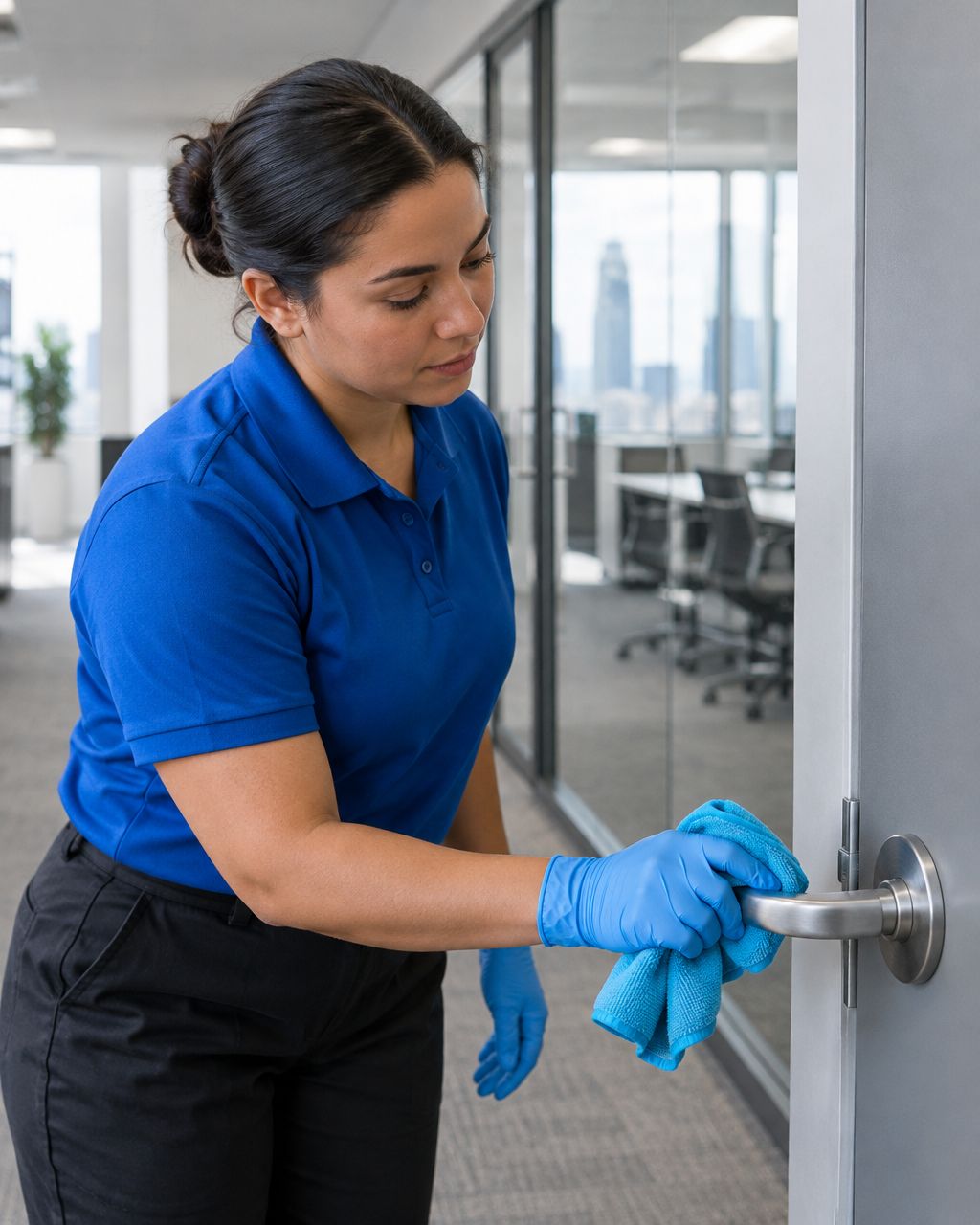
Offices should clean high-touch surfaces regularly, increase attention where traffic requires it, and address visible soil when it appears. For a Philadelphia office's 2026 service plan, assign each shared touchpoint an agreed cleaning interval, an owner and a response to changing conditions; a nightly room-cleaning schedule alone does not establish those responsibilities.
Key takeaways
- High touch surface cleaning needs named office touchpoints, agreed intervals and clear responsibility.
- Busy entrances, restroom fixtures and shared kitchen handles need attention based on actual use and visible soil.
- Cleaning and disinfecting are different tasks; specify approved products and methods rather than treating the terms as interchangeable.
- Record blocked work and missed tasks, then confirm the correction instead of relying on attendance alone.
- Hi Shine commercial office cleaning uses facility-specific HI-Q™ checklists and dedicated teams in Greater Philadelphia.
How often should offices clean high-touch surfaces?
Set the interval for the surface, not just the room. The following task-planning guide is a starting point for your commercial office cleaning scope, not a universal disinfection schedule. Confirm the actual intervals during a walkthrough, including who handles conditions between contracted visits.
| Office touchpoint | Decision to record in the scope | Condition that triggers a review |
|---|---|---|
| Entry handles, push plates and reception counters | Routine attention matched to occupied days and visitor use | Heavy visitor traffic or visible soil before the next visit |
| Elevator buttons and shared handrails | Included surfaces, approved method and responsible assignment | Shared building use exceeds the tenant's service window |
| Restroom handles, latches and faucet controls | Cleaning intervals and between-visit responsibility | Repeated soil, supply problems or unusually heavy use |
| Kitchen appliance handles and shared controls | Attention on use days, with spill handling assigned separately | Food residue, spills or additional meetings |
| Conference-room handles and shared controls | Tasks linked to room use and approved access | Back-to-back bookings prevent the planned work |
| Shared equipment and touchscreens | Manufacturer-compatible care and a named responsible team | Heavy shared use or restrictions on cleaning access |
For your 2026 agreement, replace vague wording such as general sanitizing with an identifiable task. If the building needs an occupied-hours check, state when it happens and what the worker is authorized to do. If service is not daily, identify the person responsible for cleaning needs between visits rather than treating those days as covered.
Why the surface list matters
A room can look presentable while its handles and shared controls remain outside the task list. A room name establishes a location; it does not explain which touchpoints receive attention, what method is used or how often the task runs.
Your facility manager needs enough detail to distinguish a missed task from work outside the assignment. Every surface concern should have a responsible owner.
Hi Shine commercial office cleaning serves Greater Philadelphia with dedicated teams. A facility-specific plan should connect that staffing to your approved surface list, access rules and service windows. Familiarity helps workers follow an assignment, but the written tasks still need to be clear.
Which office surfaces belong on the checklist?
Walk the building along the routes people actually use. Follow an employee from the entrance to a workstation, then follow a visitor from reception to a meeting room. List the shared points they touch rather than copying a generic room inventory.
Include relevant surfaces such as:
- Entry handles, push plates and accessible door hardware.
- Elevator call buttons, cab controls and shared handrails.
- Restroom latches, faucets, flush controls and dispenser touchpoints.
- Refrigerator handles, microwave controls and shared kitchen cabinet pulls.
- Conference-room controls, booking screens and shared remote controls.
- Copier interfaces, shared keyboards and reception counter touch areas.
Identify boundaries alongside the list. A tenant's cleaner might not own the building's elevator, and a facilities team might reserve responsibility for electronic equipment. Confirm those assignments before work starts. A shared surface should not disappear from the plan simply because more than one organization uses it.
Do not include private desks, papers or personal devices by assumption. Agree on permitted handling and exclusions so cleaning does not become unauthorized movement of confidential material. Record restricted access and a notification route for work that cannot proceed.
What changes the cleaning interval?
Actual use and observed conditions should drive adjustments. A quiet meeting room and a busy entry handle do not need identical planning merely because they sit on the same floor. Review the following factors with the person who approves your scope:
- Occupancy: distinguish regularly occupied areas from temporarily unused rooms.
- Visitor activity: account for receptions, interviews, deliveries and events.
- Shared use: identify surfaces used across tenants or departments.
- Visible soil: assign a response instead of waiting for the next routine visit.
- Service access: confirm when workers can enter and perform the approved method.
- Facility requirements: follow applicable building rules and any relevant health-authority instructions.
A 2026 hybrid-work schedule should be based on your office's attendance pattern, not an assumed busy weekday. Review changes when occupancy, room use or visitor activity shifts. Keep the revised task list available to regular and backup workers.
Resolve task ownership and access before adding visits. More frequent service cannot fix an unclear assignment.
Is cleaning the same as sanitizing or disinfecting?
Cleaning, sanitizing and disinfecting are different tasks, and the scope should name the intended work. Avoid using these terms as interchangeable promises on every shared surface.
The CDC's community-facility guidance, When and How to Clean and Disinfect a Facility, reviewed for this 2026 guide, says to consider surface type and how frequently it is touched. It explains that regular cleaning is sufficient in most situations, while high-traffic areas can warrant more frequent cleaning or additional disinfection. It also directs facilities to clean surfaces before sanitizing or disinfecting them.
This guidance covers community settings such as ordinary offices. It is not a substitute for healthcare cleaning requirements or facility-specific procedures. A corporate administrative office should not inherit clinical instructions simply because it shares a building with a medical practice.
When disinfection is part of the approved assignment, confirm:
- The product is appropriate for the intended use and surface.
- Workers follow the label, including required contact time and precautions.
- The method is compatible with the equipment manufacturer's instructions.
- The responsible team knows when routine cleaning is insufficient.
- Unfamiliar spills or suspected hazards follow the building's notification procedure.
Do not write one contact-time number into every task. Requirements depend on the product and intended use. Likewise, a wiped screen is not evidence of successful disinfection if the method does not meet the applicable instructions.
Should work happen during the day or after hours?
Choose the service window from the work and access requirements. After-hours cleaning can provide access to empty rooms; occupied-hours coverage can address agreed needs that arise while the building is in use. Neither arrangement automatically covers every touchpoint.
| Service arrangement | What it can address | Boundary to confirm |
|---|---|---|
| After-hours assignment | Approved tasks when rooms and equipment are available | Who handles soil or spills before the next visit |
| Occupied-hours assignment | Named checks and approved touch-ups during building use | Covered hours, priorities and safe access around occupants |
| Split assignment | Defined daytime tasks plus separate after-hours work | Handoff ownership so work is neither missed nor assumed complete |
For your 2026 office plan, write the handoff before adding another service window. Identify which assignment owns restroom touchpoints, kitchen handles and shared controls. If a room is occupied when cleaning is scheduled, decide whether the worker returns, defers the task or notifies a supervisor.
During occupied-hours work, preserve access routes and follow wet-surface precautions. Building access does not authorize restricted-room entry or unfamiliar spill handling.
How do you turn the plan into a usable task line?
Start with a surface that is easy to identify. Name its location, the approved method, the agreed interval and the service assignment. Add the action required if the task is blocked.
A useful task-line format is: location; named touchpoint; approved method; agreed interval; responsible assignment; exception action. Fill those fields with your building's decisions rather than leaving the interval or owner implied.
Before accepting a task list, check that:
- A worker can locate the surface without asking an occupant.
- The task distinguishes cleaning from any separately approved disinfection.
- Supplies and equipment are available during the service window.
- Occupancy and access restrictions are documented.
- A missed or blocked task reaches a named decision-maker.
Separate supply duties from surface cleaning where needed. Restocking a dispenser, cleaning its touchpoint and purchasing replacement supplies are distinct responsibilities. An agreement that covers one does not automatically cover the others.
What evidence shows the work happened?
Attendance confirms presence, not completion of the surface list. Agree on the records your building needs, what information is available and how exceptions are reported. Do not assume every service includes photographs, time-stamped reports or a customer dashboard.
Hi Shine's HI-Q™ Quality System configures tasks to facility specifications. The dedicated team works through the checklist at each visit, and the team lead confirms completion. Unfinished work is flagged for follow-up rather than treated as complete.
For your building, confirm how you will review:
- Completed tasks and any relevant exceptions.
- Rooms that were inaccessible during the service window.
- Product or supply problems that prevented work.
- A missed task's correction and follow-up owner.
- Approved changes to surfaces, methods or intervals.
Hi Shine provides 24/7 owner access for service issues. Confirm the correction process for your assignment instead of treating contact availability as an unrestricted emergency-response promise. Access to ownership helps escalation; your facility still owns decisions about safety and restricted work.
What happens during illness, events or layout changes?
Plan how changes reach the cleaning team. A visitor-heavy event can alter the use of entrances and meeting rooms, while a furniture move can introduce new shared controls or remove old ones. Update the task list rather than relying on a verbal reminder.
For illness-related concerns, follow applicable public-health guidance and your building's procedures. The CDC guidance identifies additional disinfection where people have obviously been ill and notes that local health authorities can recommend specific procedures during outbreaks. Do not promise that extra wiping alone prevents illness.
Record the approved change, affected areas, responsible assignment and return to normal scope. If the work exceeds existing permissions or service coverage, obtain authorization before it becomes routine. Unknown spills should trigger the appropriate stop-work and notification process, not improvised cleanup.
Prepare for a Philadelphia facility walkthrough
Bring your existing task list, access restrictions and examples of unresolved touchpoint concerns. Show the actual handles, controls and shared equipment rather than describing the building only by size. The walkthrough should establish what is included and who owns the work between service visits.
Hi Shine offers a 90-day risk-free trial and identifies $5MM insurance coverage. Confirm the trial terms and relevant insurance documentation for your proposed commercial assignment. Neither fact replaces a clear surface-level scope or establishes specialist disinfection capabilities.
In 2026, verify scope, exceptions and corrections.
FAQ
How often should offices clean high-touch surfaces?
Offices should clean high-touch surfaces regularly, with attention matched to use and visible soil. Record the agreed interval and responsibility for each touchpoint, including needs between contracted visits.
Which office surfaces count as high-touch?
High-touch office surfaces include shared handles, push plates, elevator controls, restroom fixtures, kitchen handles and equipment controls. Include the touchpoints people actually use and confirm who is authorized to clean them.
Does every high-touch surface need daily disinfection?
A daily disinfection requirement should not be assumed for every office surface. Distinguish routine cleaning from additional disinfection and follow applicable facility requirements, product instructions and public-health guidance.
Should office touchpoints be cleaned during business hours?
Occupied-hours cleaning is appropriate when agreed tasks need attention during building use. Define covered hours, access restrictions and the handoff to after-hours service rather than assuming daytime coverage is necessary everywhere.
Who cleans shared keyboards and touchscreens?
The written scope should name the responsible team for shared keyboards and touchscreens. Use manufacturer-compatible methods and do not treat access to equipment as permission to apply any cleaning product.
How can a facility manager verify high-touch cleaning?
Agree on task confirmation, exception reporting and correction follow-up. Attendance alone does not show that the named surfaces were cleaned, and reporting features should be confirmed rather than assumed.
Can Hi Shine help define an office's high-touch cleaning scope?
Hi Shine provides commercial office cleaning teams in Greater Philadelphia and facility-specific HI-Q™ task lists. Request a facility assessment to discuss surfaces, service windows, access and accountability for your building.
One last thing
Ask who owns the surface when the cleaning crew is not there. If the answer is unclear, the missing piece is responsibility, not another promise of cleanliness. Get a free facility assessment with your touchpoint list and between-visit concerns ready.