
School Cleaning Services Philadelphia: 2026 Scope Guide
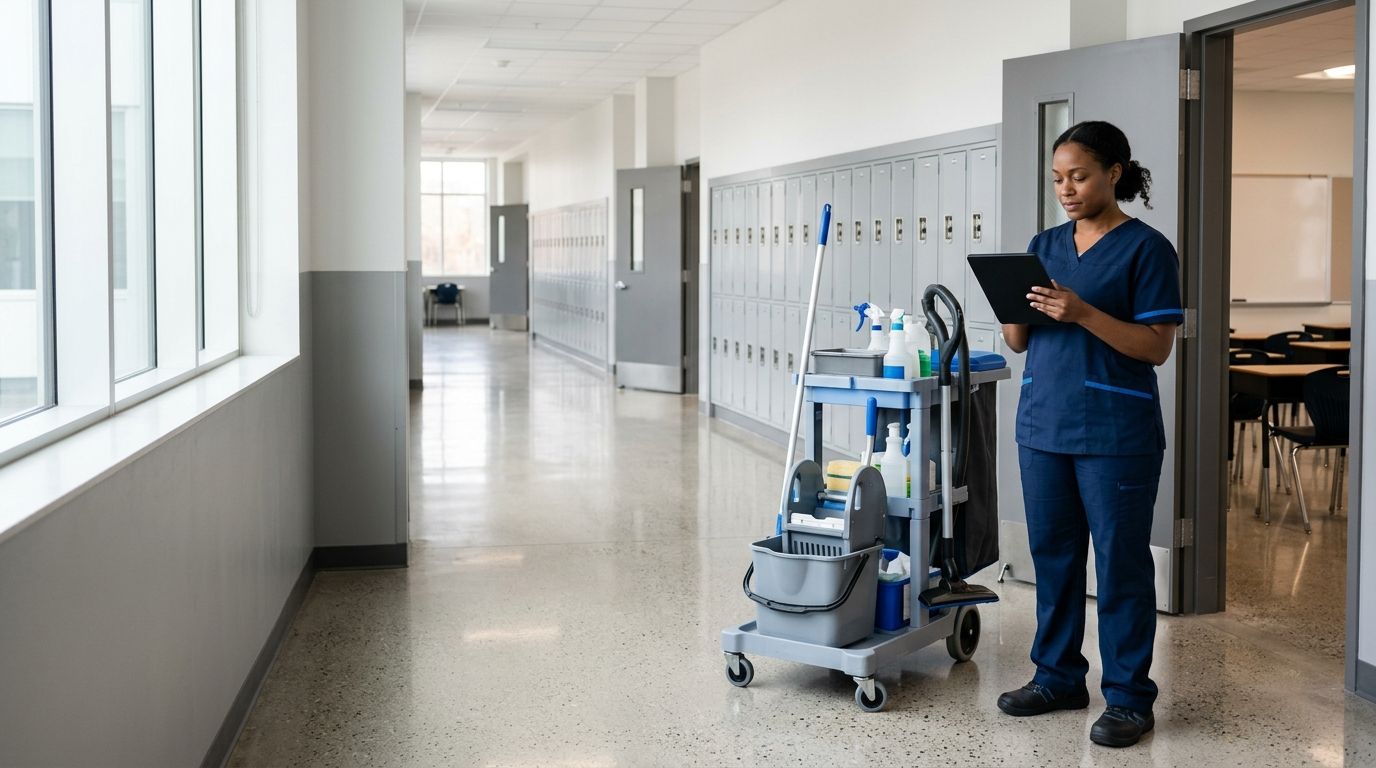
School cleaning services in Philadelphia should be built around the academic calendar, student occupancy, room use, access, event schedules, and a written correction process. The 2026 goal is not a generic promise of cleanliness; it is a task-level scope that school administrators can verify.
Hi Shine provides commercial cleaning for education facilities across Greater Philadelphia.
- Build the school cleaning scope by room, task, frequency, owner, and inspection method.
- Separate daily occupied-space work from periodic, event, and summer work.
- The school must define health, safety, product, and student-access requirements.
- Stable crews make keys, badges, training, and building knowledge easier to control.
- Every missed or blocked task needs a named correction owner and deadline.
Why this matters
A school does not operate like a conventional office. Classrooms turn over throughout the day. Gyms and cafeterias have event peaks. Restrooms can require checks while the building is occupied. Summer work may involve floor care, furniture movement, or construction dust that is not part of the daily contract.
When all of that is compressed into "clean the school," both sides make assumptions. The vendor assumes a room is available. Staff assume event cleanup is included. A locked classroom is missed without a record. A 2026 scope removes those assumptions.
What should school cleaning services in Philadelphia include?
School cleaning services in Philadelphia should include a room-level task matrix, service windows tied to the academic calendar, approved products, student-access rules, stable staffing, inspection records, and a correction process. In 2026, the contract should also separate daily service from events, break-period work, summer projects, and emergencies so each assignment has a clear owner and approval path.
Define the facility before defining the work
Start with a current room inventory. Use the names and numbers staff already recognize so work orders, inspections, and corrections refer to the same place.
Include every space type
- General classrooms
- Early-childhood or special-use rooms, where applicable
- Administrative offices
- Faculty and staff areas
- Libraries and media rooms
- Science rooms and support areas
- Art and music rooms
- Cafeterias and food-service seating areas
- Gymnasiums, locker rooms, and activity spaces
- Auditoriums and event rooms
- Health offices and other restricted rooms
- Student and staff restrooms
- Entrances, vestibules, stairs, corridors, and elevators
- Storage, receiving, and waste areas
- Exterior entrances included in the contract
The school decides which areas are in scope and which require another trained owner. A janitorial vendor should not assume responsibility for laboratory materials, clinical items, pest control, hazardous materials, or maintenance work that the contract does not expressly assign.
Write the daily scope by room
A daily checklist should name observable tasks. "Clean classroom" is too broad to inspect fairly.
Classroom example
A classroom scope may include:
- Remove ordinary waste from approved containers
- Replace liners under the school's rules
- Clean accessible floor areas
- Address approved touch surfaces at the assigned frequency
- Reset movable items only when the school permits it
- Report spills, damage, unsecured materials, or blocked areas
- Record completion or the reason work could not be completed
The school should define who handles desks with student materials, technology, teaching equipment, science items, food, or personal belongings. If the surface is not clearly assigned, the cleaner should leave it and report the exception.
Restroom example
Restroom instructions should separate cleaning, replenishment, inspection, and closure checks. Include:
- Fixtures and partitions
- Floors and visible soil
- Approved touch surfaces
- Soap, paper, and liner replenishment
- Odor or leak reporting
- Graffiti or damage reporting
- Wet-floor controls
- Final check and completion record
A daytime restroom check is not the same as a full service. Define each one so staffing and expectations match.
Separate recurring and periodic work
Many school cleaning disputes come from periodic tasks hidden inside a daily price. Put recurring, periodic, event, and project work on separate schedules.
| Work type | Examples | Scheduling control |
|---|---|---|
| Daily | Waste, floors, restrooms, routine room tasks | School-day service window |
| Weekly or monthly | Detail work, selected surfaces, low-use areas | Planned rotation |
| Event | Athletics, performances, meetings, ceremonies | Written request and authorization |
| Break-period | Deeper work in available rooms | Academic-calendar window |
| Summer | Floor projects, furniture moves, construction follow-up | Separate approved project scope |
| Emergency | Spill or weather response within vendor capability | Named contact and authorization rule |
Do not use this table as a universal frequency. The school sets frequencies from actual occupancy, building condition, policy, and available service windows.
Protect students and occupied spaces
The school controls when and where cleaning can happen around students. Put those controls in writing before work starts.
Define occupied-building rules
- Approved work hours by building and zone
- Rooms that require an escort
- Areas that cannot be serviced while students are present
- Noise and equipment restrictions
- Wet-floor controls and temporary closures
- Product-storage and cart-security rules
- Photo and personal-device restrictions
- Lost-item and personal-property rules
- Procedures for finding an unattended student or visitor
- Emergency communication and evacuation expectations
A cleaner should never improvise around an occupied classroom, unsecured student record, medication, sharp object, unknown chemical, or active maintenance condition. The scope needs a stop-work and notification process.
Control products and supplies
The school should approve products for intended surfaces and uses. The vendor should maintain an accurate inventory and current Safety Data Sheets for the products it brings on site.
A 2026 product plan should identify:
- Approved product name or facility code
- Intended surface and task
- Dilution or ready-to-use status
- Storage location
- Label and container requirements
- Personal protective equipment
- Ventilation or occupancy restrictions
- Person authorized to approve substitutions
The contract should also state who buys soap, paper products, liners, and dispensers; where backup stock is kept; and how low inventory is reported. Supply responsibility should not be discovered after a restroom runs out.
Build the schedule around the school calendar
The academic calendar is an operating input, not an attachment. Map service changes before the contract begins.
Schedule these dates
- First and last student days
- Teacher preparation days
- Holidays and extended closures
- Parent conferences
- Athletic seasons and major events
- Performances and auditorium use
- Testing periods with access restrictions
- Summer programs
- Floor-care and furniture-move windows
- Construction or renovation handoffs
Assign one school contact who can approve changes. A verbal request from any staff member can create conflicting priorities and uncontrolled cost.
Manage keys, alarms, and building access
School access requires discipline. The access plan should list approved workers, badges or keys, service windows, alarm steps, and removal procedures.
A dedicated team makes this easier because fewer workers need approval and site instruction. Hi Shine's dedicated-team model supports continuity, but the school still defines its screening, identification, escort, and access requirements.
Put these controls in the file
- Approved-personnel list
- Backup-personnel approval method
- Badge and key issue log
- Alarm instructions and escalation contacts
- Opening and lock-up responsibilities
- Restricted rooms and mechanical spaces
- Access suspension after staffing changes
- Incident-reporting process
Never share alarm codes or keys informally. Each item needs an assigned person and return record.
Inspect the work without relying on complaints
Waiting for teachers or families to complain is not quality control. A school should inspect a representative mix of high-use, low-use, public, and restricted areas.
Use three levels of verification
- Worker completion: The assigned cleaner records completed and blocked tasks.
- Supervisor review: The vendor checks selected rooms and open exceptions.
- School review: The facilities owner reviews patterns, repeat misses, and unresolved items.
Hi Shine's HI-Q quality system is designed to make assigned work and accountability visible. The 2026 school scope should still define what counts as complete and how quickly each issue class must be corrected.
Create a correction process
A useful issue record contains enough detail to fix the problem without a long email chain.
Record:
- Building and room
- Task or condition
- Time discovered
- Whether the room is occupied or restricted
- Person notified
- Immediate action, if authorized
- Assigned correction owner
- Due time or service window
- Closure verification
Separate recurring misses from one-time exceptions. A locked room is not the same as a skipped task. A repeat locked room still needs a process change.
Evaluate a school cleaning proposal
Compare proposals against the same room inventory and frequencies. If vendors bid different assumptions, the totals are not comparable.
Require these sections
- Building and room inventory
- Daily task matrix
- Periodic-work calendar
- Event-service request process
- Summer-work assumptions
- Staffing and backup plan
- Access and student-safety rules
- Product and supply responsibilities
- Completion and inspection records
- Incident and correction process
- Explicit exclusions
The vendor should explain who owns the account after the sale. Direct access to a responsible decision-maker matters when an alarm fails, an event runs late, or a building opens unexpectedly.
Plan onboarding before the first shift
A strong cleaning vendor onboarding process turns the contract into daily instructions.
2026 onboarding sequence
- Confirm buildings, rooms, and current conditions.
- Finalize the recurring and periodic task matrices.
- Approve products, supplies, and storage.
- Approve personnel and access.
- Walk service routes and emergency exits.
- Test completion and exception records.
- Run the first shift with supervisor observation.
- Inspect representative rooms before the next school day.
- Correct scope gaps in writing.
- Review results at defined checkpoints.
A Hi Shine facility assessment should expose missing rooms, unclear responsibilities, and schedule conflicts before they become service failures.
FAQ
What should school cleaning services include?
School cleaning services should include a room-level task matrix, frequencies, periodic work, access rules, supply ownership, inspections, exceptions, and correction responsibility.
Should event cleanup be included in the regular school contract?
Only if the contract identifies the events, rooms, notice, service window, and authorization. Otherwise, event work should use a separate request process.
Who decides which products are used in a school?
The school should approve products for intended surfaces and occupied-building conditions. The vendor should follow labels, maintain records, and obtain approval before substitutions.
Can cleaners work while students are present?
The school decides which tasks and zones are allowed during occupied hours. The written plan should address supervision, noise, wet floors, products, and restricted spaces.
How should missed rooms be reported?
Record the building, room, task, reason, time, notification, correction owner, and closure. Do not hide blocked access inside a completed checklist.
Why use a dedicated school cleaning crew?
A stable crew reduces repeated access setup and preserves building-specific knowledge. The school still controls screening, training, identification, and backup approval.
How should a school test a new cleaning vendor?
Use a limited, documented starting period with agreed inspections, issue logs, correction times, and review checkpoints before making long-term assumptions.
One last thing
A Hi Shine commercial cleaning plan for 2026 should answer one simple question for every room: what gets done, when, by whom, how it is checked, and who fixes it when access or conditions get in the way.