
Industrial Cleaning Chester: How Often in 2026?
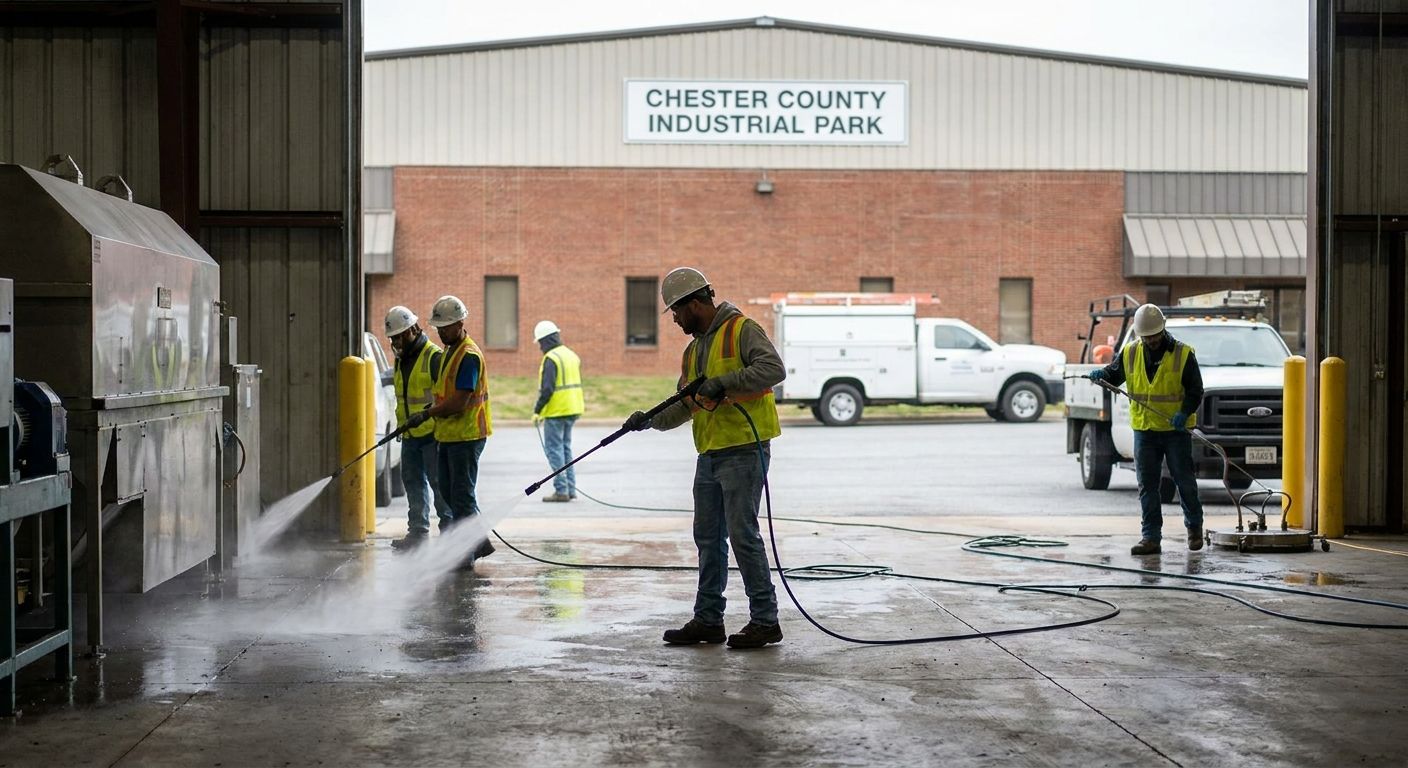
Industrial facilities in Chester County — from biotech manufacturing floors near Great Valley to warehouse and distribution sites along Route 202 — don't run on one cleaning schedule. Production floors need daily attention, deep floor maintenance can wait weeks, and the right cadence depends on shift structure, regulatory exposure, and foot traffic more than square footage.
- Production floors, restrooms, and break areas need daily service in most industrial facilities.
- Warehouse zones and loading docks typically hold up on 2-3x weekly cleaning.
- Deep floor maintenance (stripping, waxing, scrubbing) belongs on a monthly-to-quarterly cycle, not a yearly one.
- Biotech and pharma sites in Chester County often need cleaning logs, not just visible cleanliness, to satisfy audits.
- Hi Shine Cleaning Services builds industrial cleaning Chester schedules around actual shift patterns instead of a fixed weekly template.
Why this matters
A facility manager who sets cleaning frequency by guesswork usually finds out the schedule was wrong at the worst moment — an OSHA walkthrough, a client site visit, or a slip-and-fall claim. Chester County's mix of biotech, pharma, and light-industrial tenants means the stakes on cleaning documentation are higher here than in a generic warehouse market.
Hi Shine Cleaning Services works with facility and property managers across Greater Philadelphia who inherited a cleaning schedule from a prior vendor and never had it reassessed against current production volume or headcount. That's the gap this page fixes.
How often should industrial facilities in Chester County be cleaned?
Frequency splits by zone, not by building. A single industrial site in 2026 typically runs three or four different cleaning cadences at once.
| Zone | Recommended frequency | Why |
|---|---|---|
| Production/manufacturing floor | Daily | Dust, debris, and equipment traffic build up fast and create slip hazards |
| Restrooms & break rooms | Daily | Highest touchpoint density on the site; direct health code exposure |
| Warehouse & loading dock | 2-3x weekly | Lower touch volume but heavier debris from pallets and packaging |
| Office/admin areas within the facility | 2-3x weekly | Traffic is lighter than production but still daily-occupied |
| Deep floor maintenance (strip/wax/scrub) | Monthly to quarterly | Protects epoxy and sealed concrete from premature wear |
| Cleanroom-adjacent or regulated zones | Daily to per-shift | Documentation requirements demand a verifiable log, not a visual check |
Daily service: production floors, restrooms, and break areas
Any zone with continuous foot traffic or food contact needs daily cleaning — no exceptions in 2026. Skip a day on a production floor and you're not just risking appearance, you're risking a fall incident on a floor covered in dust or spilled material. Break rooms and restrooms carry the same urgency because they're the highest-touch surfaces in the building regardless of facility type.
Weekly service: warehouse zones and loading docks
Warehouse and dock areas generate heavy debris — cardboard, shrink wrap, pallet fragments — but see less continuous human contact than production floors. Three cleanings a week is typically enough to keep these zones from becoming a fire or trip hazard, though 24/7 operations should push toward daily.
Monthly to quarterly: deep floor maintenance and stripping
Epoxy and sealed concrete floors common in industrial buildings need a scheduled strip-and-recoat or deep scrub cycle separate from daily janitorial work. Stretching this past a quarter accelerates wear patterns and makes the eventual recoat more expensive and more disruptive to operations. A facility running two shifts wears its floor coating faster than a single-shift site and should tighten this cycle accordingly.
Why cleaning frequency varies
- Shift structure — a 24/7 operation needs cleaning built around shift changes, not a single nightly visit
- Regulatory exposure — biotech and pharma tenants in Chester County often need documented, timestamped cleaning logs for audit purposes
- Foot traffic volume — a 50-person production floor and a 500-person facility can't run the same schedule
- Flooring type — epoxy and sealed concrete need scheduled maintenance that carpet or tile in office zones doesn't
- Food and break areas — any space with food contact needs daily service regardless of the rest of the building's cadence
- Seasonal conditions — Chester County winters track salt and mud into entryways and loading docks, which pushes entry-zone cleaning frequency up for several months a year
“The schedule that worked for your facility two years ago is probably wrong for the headcount and shift pattern you're running in 2026.”
Is daily cleaning overkill for a small industrial facility?
No — daily cleaning of restrooms, break areas, and production floors is standard even in smaller industrial buildings, because those zones carry health and safety exposure regardless of square footage. What scales down with facility size is the crew size and hours on site, not the frequency of the highest-risk zones.
How does Chester County's biotech cluster affect cleaning requirements?
Biotech and life sciences tenants concentrated around Chester County typically require cleaning frequency documentation, not just a clean-looking floor, because their own audits and client visits depend on a verifiable log. A facility cleaning company that services biotech and life sciences facilities understands this distinction better than a generalist janitorial vendor that only tracks visible tidiness. The same documentation discipline shows up in vendors that handle laboratory cleaning work, where chain-of-custody on cleaning logs matters as much as the cleaning itself.
What happens if an industrial facility skips scheduled cleaning?
Skipping even a few scheduled cleanings compounds fast: dust and debris accumulate on production floors, restroom touchpoints go unaddressed, and floor coatings wear unevenly without regular maintenance. The cost of catching up is almost always higher than the cost of staying on schedule, because deferred deep cleaning (stripping, recoating) takes longer and disrupts operations more than routine maintenance ever would.
Get a Free Facility Assessment
See what your current schedule is missing before it costs you.
FAQ
How often should an industrial facility be cleaned in Chester County?
Production floors, restrooms, and break areas need daily cleaning. Warehouse zones typically run on a two- or three-times-weekly schedule, while deep floor maintenance follows a monthly-to-quarterly cycle.
Do biotech facilities need a different cleaning schedule than a standard warehouse?
Yes. Biotech and pharma sites often require documented, timestamped cleaning logs rather than relying only on visual checks.
How often should industrial restrooms be cleaned?
Industrial restrooms need daily cleaning regardless of facility size because they carry high touchpoint density and direct health exposure.
How often should epoxy or sealed concrete floors get deep cleaned?
Deep floor maintenance such as stripping, waxing, and scrubbing belongs on a monthly-to-quarterly schedule. The facility's traffic, shifts, and flooring condition should set the exact cadence.
Does a 24/7 operation need a different cleaning cadence?
Yes. A 24/7 operation needs cleaning scheduled around shift changes rather than one nightly visit because continuous use increases floor and touchpoint wear.
What is the risk of under-cleaning a warehouse loading dock?
Under-cleaning allows pallet and packaging debris to become trip and fire hazards. Two or three service visits per week is a practical starting point for many docks, adjusted for actual volume.
Should office areas be cleaned as often as the production floor?
Usually not. Office and administrative areas can often use a lighter schedule than production floors and restrooms, based on occupancy and use.
How do Chester County winters affect cleaning frequency?
Winter salt and mud increase entryway and loading-dock maintenance. Add service where tracked-in material accumulates instead of increasing every zone equally.
One last thing
Most facility managers reassess their cleaning contract when something goes visibly wrong — a client complaint, a failed inspection, a fall — rather than on a fixed review cycle. The floors and touchpoints that wear fastest are usually the ones nobody scheduled a reassessment around, because the original contract was written for a headcount or shift pattern that's since changed. Pull your current cleaning schedule and check it against your actual 2026 shift structure before your next contract renewal, not after an incident forces the conversation.